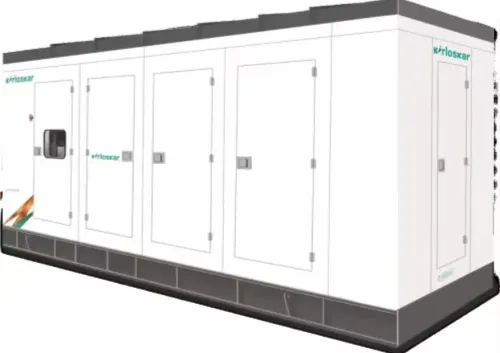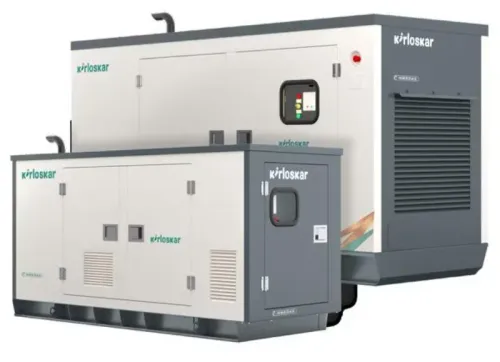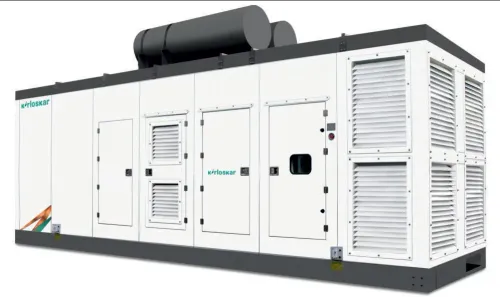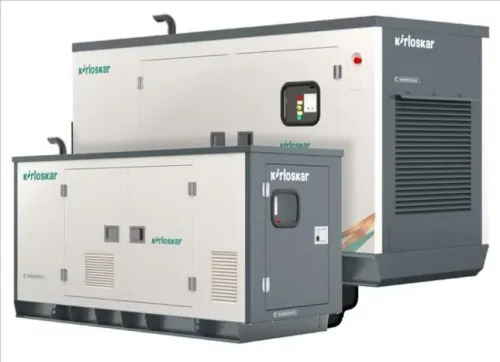
A compact diesel generator can keep selected office systems operating during a mains failure, but its value depends on correct load selection, installation space and compliance work. By the end, you will be able to identify which circuits need backup, compare generator options, and specify a practical 7.5KVA, 10KVA or 15KVA arrangement for a Bangalore office.
Key takeaways
- Back up UPS, networking, security, access control and essential lighting circuits first.
- Calculate generator capacity from starting loads, running loads and future expansion.
- Compare diesel runtime with UPS limits, a larger genset and dual-generator redundancy.
- Confirm CPCB IV+ compliance, exhaust routing, ventilation, earthing and maintenance access.
Which office systems stay alive when the mains fails?
A UPS carries the first seconds of an outage, keeping servers, switches, storage devices, security controllers and other sensitive electronics online without a visible interruption. The automatic mains failure system then detects the failed supply, starts the diesel set, waits for stable voltage and frequency, and transfers the selected circuits through the automatic transfer switch.
| Office system | What remains powered | Continuity arrangement |
|---|---|---|
| UPS-backed IT | Servers, network switches, Wi-Fi, access control and telecoms | Battery power starts immediately; the generator restores the UPS input |
| Essential lighting and safety | Emergency lighting, fire panels, CCTV and security systems | AMF transfers these circuits after generator stabilisation |
| Building services | Selected lifts, water pumps, HVAC equipment and server-room cooling | Transfer depends on starting kVA and programmed load priority |
| Non-essential loads | Pantry equipment, decorative lighting and some workstations | Shed or leave disconnected to protect generator capacity |
Specify the generator warm-up time, transfer delay, retransfer delay, cool-down period and action after a failed start. The UPS must also accept the generator’s voltage, frequency variation, harmonics and step-load response; a nameplate kVA match alone proves little.
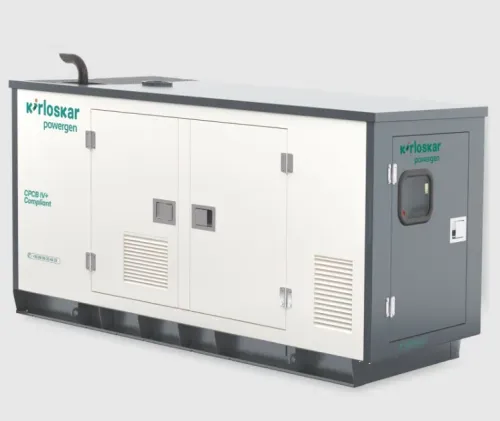
A compact genset for office backup works best with a tested essential-load schedule. It reduces fuel use and plant-room demand, but radiator airflow, exhaust, battery access and service clearance still occupy space. Select an office power backup generator in Bangalore only after those installation needs are measured.
Size the generator from circuits, not floor area or headcount
An office load schedule, not floor area or headcount, determines the right generator. Record each essential circuit’s running kW, power factor, phase, and starting kVA; then separate continuous loads from equipment that starts intermittently.
Compact diesel generator benefits for offices in Bangalore include shorter cable runs when the set sits near the essential-load distribution board, but poor airflow at that location can cause overheating and derating.
- Servers, switches, access control, emergency lighting and fire systems: record measured running demand.
- Lifts, pumps, air-conditioning compressors and printers: record motor size, starting method and locked-rotor or starting kVA.
- Three-phase circuits: show phase allocation so one phase does not carry excessive current.
Convert kW to kVA using kVA = kW ÷ power factor. Add diversity only where the control sequence prevents every load starting together, then check the largest motor start, step-load voltage and frequency dip. A 12 kW schedule at 0.8 power factor already needs 15 kVA before starting margin.
| Option | Use when the schedule shows | Check before choosing |
|---|---|---|
| 7.5 kVA | Light essential circuits with modest starting demand | Running kVA and motor-starting dip fit the rating |
| 10 kVA | Networking, lighting, security and selected small motors | Starting loads do not overlap |
| 15 kVA | Higher running demand or one substantial motor | Three-phase balance, standby rating and low-load risk |
Choose standby kVA for outage-only operation; choose prime kVA for recurring or extended operation. A 15 kVA set running lightly after load shedding can wet-stack, so define minimum loading and loaded-test arrangements.
Compare the compact set with batteries, a larger genset and two smaller sets
Use a UPS for zero-interruption loads: servers, network switches, access control and orderly shutdown of computers. An inverter suits lighter office circuits for shorter outages, but battery autonomy falls quickly under air-conditioning, lift or pump loads.
| Option | Best suited to | Main trade-off |
|---|---|---|
| UPS batteries | IT equipment, network racks, access control and emergency lighting | Instant transfer, but limited runtime and expensive battery replacement |
| Inverter system | Small offices, lights, Wi-Fi and workstations | Compact and quiet, but poor fit for motors, lifts and long high-load outages |
| Compact diesel generator | Essential lighting, servers, pumps, selected HVAC and one lift | Smaller plant-room footprint, but limited starting kVA and capacity |
| Larger diesel generator | Broad HVAC, multiple lifts, pumps and whole-office operation | More usable capacity, but greater clearance, fuel, exhaust and service space |
| Two smaller generators | Offices needing staged capacity or redundancy | Better resilience and part-load flexibility, but needs extra controls, cabling and maintenance space |
A compact genset for office backup works when you shed non-essential circuits and document running kW, power factor and the largest motor-starting load. A nameplate that fits the average load can still fail when a lift, compressor or fire pump starts.
Check alternator, AVR and UPS compatibility because office electronics and variable-frequency drives can add harmonics.
The office diesel generator advantages in Bangalore include placing the set nearer the load centre, reducing cable length and voltage drop. Do not confuse purchase footprint with installation footprint: reserve radiator airflow, exhaust routing, fuel connections, battery access, lifting space and filter-removal clearance.
A larger set or dual-generator arrangement needs more room but provides capacity that a compact unit cannot.
Make the Bangalore installation fit the building and CPCB IV+ rules
The purchase footprint is not the installation footprint. Reserve clearance around the compact set for radiator airflow, exhaust routing, fuel connections, battery access, filter changes, lifting and removal of major components. A unit that fits but cannot be serviced in place is a poor office power backup generator in Bangalore.
Use a structural engineer for rooftop or basement locations. Specify resilient mounts, flexible exhaust and fuel connections, and separated cable-tray supports; otherwise vibration can travel through concrete, pipes and trays even when an acoustic enclosure reduces airborne noise.
Keep basement installations out of flood paths and provide mechanical air intake, hot-air discharge, combustion air and safe exhaust termination. Protect rooftop equipment from monsoon water, driving rain and solar heat.
Coordinate the layout and approvals before delivery:
- Confirm equipment-room clearances, shaft openings, lifting access and fire separation with the building owner and facility consultant.
- Check electrical interconnection, earthing and changeover arrangements with the electrical consultant and BESCOM where applicable.
- Confirm local requirements with BBMP, Karnataka State Pollution Control Board and the fire authority; ask whether diesel quantity triggers PESO controls.
- Obtain the manufacturer’s altitude and ambient-temperature derating curve for Bangalore’s roughly 900–1,000-metre elevation and the hotter rooftop condition.
- File the exact engine model, rated kW band, CPCB IV+ approval or conformity document, after-treatment and sensor details, commissioning report, service schedule, stack information and operating log.
CPCB IV+ office generator benefits depend on delivered-engine documents, not “IV+ ready” wording. CPCB IV+ controls emissions; it does not promise lower fuel use, quiet operation or zero local pollution.
Turn the generator choice into a reliable office operating plan
Approve the set only after its operating plan is written into the specification. Compact diesel generator benefits for offices in Bangalore include locating the unit near the load centre, but radiator discharge must not recirculate into the intake and erase the cooling margin.
1. Ask for output derating at the building’s site elevation and design ambient temperature, not only the nameplate kVA. Require the supplier to state the resulting usable kVA, voltage, frequency and three-phase balance.
2. Set fuel autonomy from the manufacturer’s fuel-burn curve at your planned load. Record runtime, tank or day-tank capacity, bunding, spill control, replenishment access and the building approvals governing storage.
3. Put essential-load shedding in the single-line diagram: servers, network equipment, access control, emergency lighting, fire systems, pumps and selected lifts stay on; noncritical HVAC and pantry loads drop. Test the automatic sequence with real loads.
4. Define the low-load test interval, minimum loading and acceptance method. If the shed load leaves the engine lightly loaded, schedule a properly sized load-bank test to limit wet stacking and carbon deposits.
5. Reserve service clearance for filters, batteries, controller access, lifting and major-component removal, then require engine serial details, CPCB IV+ compliance records, rating sheet, fuel curve, controller settings, test report, manuals and service schedule.
These controls turn CPCB IV+ office generator benefits into evidence rather than a sales label. Office diesel generator advantages in Bangalore include selective continuity and lower cable losses, but only if the plan is documented. Metro Power Corporation can be asked to quote the operating data and drawings alongside the kVA price.
Related products
 | CPCB IV+ 7.5KVA TO 20KVA • Prime rating and Stand-by rating • State of the art Genset Controller • No replacement to displacement • Peace-of-mind Ownership • Best Fluid... View product → |
 | CPCB IV+ 7.5KVA TO 20KVA • Prime rating and Stand-by rating • State of the art Genset Controller • No replacement to displacement • Peace-of-mind Ownership • Best Fluid... View product → |
Frequently asked questions
Which office systems should a compact diesel generator keep running?
Prioritise UPS-backed servers, network switches, storage, security controllers, access control, emergency lighting and other essential circuits. Exclude noncritical loads when generator capacity is limited.
How do you size a generator for an office?
List each selected circuit, record running watts or kVA, add motor and equipment starting demand, and allow capacity for planned expansion. Floor area and employee count do not determine generator size.
When is a compact genset better than batteries or a larger generator?
A compact genset suits offices needing extended backup for essential circuits without powering the whole building. Batteries provide silent short-duration support, while a larger genset covers heavier loads but needs more space, fuel and installation capacity.
What must a Bangalore office check before installing a CPCB IV+ generator?
Check the CPCB IV+ model documentation, exhaust routing, acoustic treatment, ventilation, fuel storage, earthing, transfer-switch location, maintenance access and building approvals before installation.
Related product
 | CPCB IV+ 7.5KVA TO 20KVA • Prime rating and Stand-by rating • State of the art Genset Controller • No replacement to displacement • Peace-of-mind Ownership • Best Fluid... View product → |
Keywords