A 400 kVA nameplate does not automatically mean 400 kW of usable electrical output, and a low quotation can exclude the panels, exhaust, foundation and commissioning work that make the set operational. You will be able to calculate the required capacity, compare 320 kVA, 400 kVA, 500 kVA and multiple-set options, verify CPCB IV+ paperwork, and assess dealer support before signing a purchase order.
Key takeaways
- At 0.8 power factor, 400 kVA equals 320 kW of usable output.
- Add motor starting current before finalising generator capacity.
- Choose prime power for regular loads and standby power for outages.
- Verify CPCB IV+ documents, acoustic treatment, exhaust and installation clearances.
What 400 kVA actually supplies: kW, power factor and starting current
A 400 kVA generator provides 320 kW when its rating uses the standard 0.8 power factor: kW = kVA × power factor. At 0.7 power factor, the same 400 kVA alternator supplies about 280 kW, so kVA alone does not describe usable capacity.
| Load condition | Electrical limit | What to specify |
|---|---|---|
| 0.8 power factor | 400 kVA / 320 kW | Normal commercial design basis |
| 0.7 power factor | 400 kVA / 280 kW | Confirm before connecting inductive loads |
| Motor starting | Brief high kVA and current surge | State allowable voltage dip and starting method |
Your load schedule must show running kW, kVA, power factor and starting current for HVAC compressors, lifts, pumps, fire systems, lighting, servers and UPS systems. A set with enough running kW can still trip or fail to start the largest motor when its inrush current arrives.
Specify both ratings in the purchase request, along with 415 V, three-phase, 50 Hz output, voltage regulation, transient response and required future spare capacity. Ask whether the quoted rating is prime or standby: prime power suits extended variable-load operation, while standby power applies to emergency outages with stated operating-hour and loading limits.
If you plan to buy 400 kva diesel generator in bangalore, submit this schedule before comparing quotations. It prevents an apparently adequate set from being undersized in service.
How to size the set from your building load schedule
A 400 kVA set can carry the building only if both its running demand and worst starting event fit within its limits. At the standard 0.8 power factor, its approximate output is 320 kW; at 0.7 power factor, the same 400 kVA alternator supplies about 280 kW.
1. List every load transferred to the generator: chillers, air-handling units, lifts, domestic and fire pumps, fire alarms, servers, UPS systems, lighting, sockets and battery chargers.
2. Record each load’s running kW, kVA, power factor and starting method. Mark which loads operate together during an outage instead of adding every nameplate blindly. For UPS systems, include input power factor, battery-recharge current and harmonic distortion.
3. Total the simultaneous running kW and kVA separately. The result must stay below the generator’s stated limits, with spare capacity for the future expansion percentage specified by your electrical designer.
4. Identify the largest motor-starting event. Check its locked-rotor current, starting method and required voltage-dip limit while the other essential loads remain energised. A set that carries the running load can still stall or trip when a chiller, lift or pump starts.
5. Test the proposed start sequence: fire systems and life-safety loads first, then essential services, with large motors staggered. Ask for a load-step and transient-voltage calculation, not only a total kW figure.
6. Confirm the alternator is suitable for UPS and other nonlinear loads. If the schedule exceeds 400 kVA, 320 kW, or the starting limits, compare a 500 kVA set or multiple load-sharing sets.
Prime or standby, one set or several: choose the operating arrangement
A 400 kVA standby set suits a building that runs on utility power and needs backup only during outages. Choose a 400 kVA prime-rated set when the generator will supply variable loads for extended periods, including sites without dependable grid supply.
| Option | Approximate output at 0.8 power factor | When it applies |
|---|---|---|
| 320 kVA | 256 kW | The assessed demand remains comfortably below this level and starting loads are modest |
| 400 kVA standby | 320 kW | Emergency backup covers the essential load, within the manufacturer’s annual-hour and loading limits |
| 400 kVA prime | 320 kW | The set will operate regularly or continuously at changing loads |
| 500 kVA | 400 kW | Expansion, motor starting or sustained demand would leave too little margin on 400 kVA |
| Multiple sets | Combined output varies by configuration | Redundancy, staged loading, maintenance without total shutdown or future expansion matters |
Do not oversize a standby set simply to create a large buffer. Long operation at very light load can cause poor combustion and carbon buildup; confirm the manufacturer’s minimum loading guidance.
A 320 kVA set is the better match when the maximum demand and starting sequence fit it, while a 500 kVA set is safer when HVAC, pumps or lifts create a narrow starting margin.
For several generators, require automatic load sharing, synchronising, protection coordination and a clear failure sequence. Ask a large diesel generator supplier in Bangalore to state prime or standby rating, permitted operating pattern, site-condition output, fuel use at defined loads and service response terms in the quotation.
What to verify for CPCB IV+ installation in Bangalore
Before ordering, obtain a signed specification that identifies the engine model, alternator, controller, acoustic enclosure, radiator arrangement, fuel tank, rating duty, and installation dimensions. Confirm the 400 kVA rating at the stated power factor, ambient temperature and altitude; also record allowable exhaust back pressure and motor-starting capability.
| Check | Confirm | Evidence to request |
|---|---|---|
| Emissions | CPCB IV+ applicability, not the obsolete generic “CPCB II” description | Engine approval, conformity documents and manufacturing date |
| Fuel use | Consumption at 25%, 50%, 75% and 100% load | Litres-per-hour figures with fuel specification, ambient conditions and tolerance |
| Electrical interface | AMF panel, breaker rating, protection, earthing, neutral arrangement and ATS compatibility | Single-line diagram and controller schedule |
| Site installation | Foundation loading, room or outdoor footprint, ventilation, radiator clearance, exhaust route and stack height | Layout drawing and civil requirements |
| Local compliance | Noise control, fuel storage, fire protection and Karnataka authority approvals | Responsibility matrix naming who obtains each approval |
Ask a 400 kVA generator dealer in Bangalore to state who installs, commissions and load-tests the set. Put Bangalore response time, technician availability, preventive-maintenance intervals, critical spares, warranty start date, battery and consumable exclusions, and escalation for controller or emissions faults into the order. A quotation without these details is not installation-ready.
How to compare a 400 kVA Kirloskar genset quote and dealer support
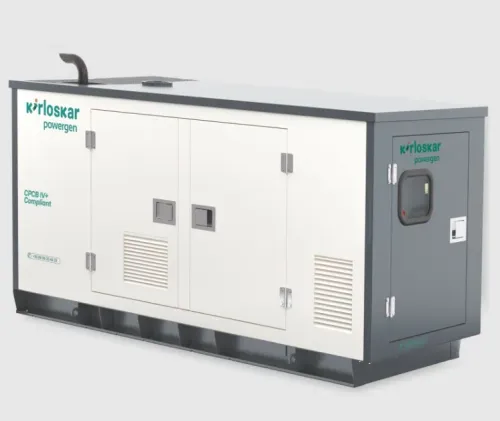
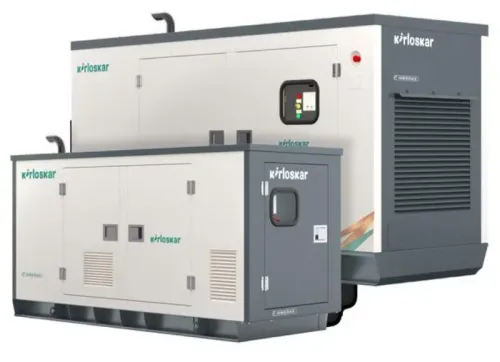
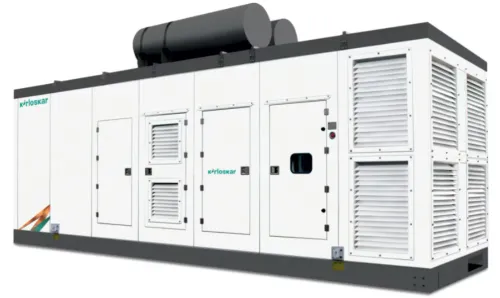
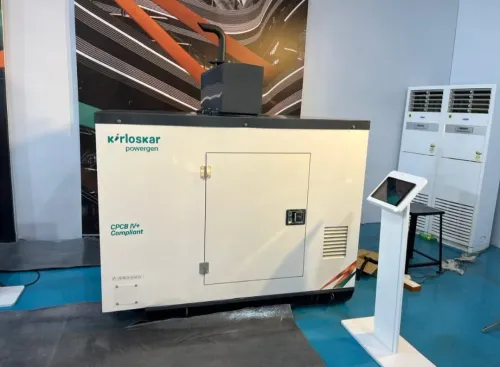
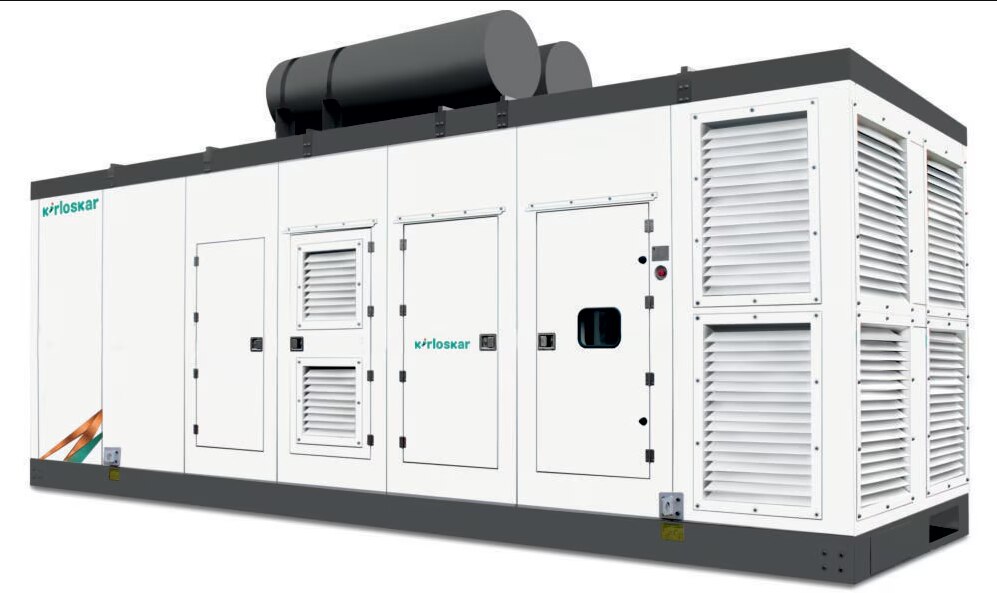
A 400 kVA Kirloskar genset quote is comparable only when it names the engine, alternator, controller, enclosure, fuel-tank capacity, radiator arrangement, emissions package and rating. It must state 400 kVA and approximately 320 kW at 0.8 power factor, plus prime or standby duty, manufacturing date and CPCB IV+ compliance basis.
Compare fuel consumption at 25%, 50%, 75% and 100% load, with fuel specification, ambient temperature and tolerance stated.
| Option | Check before accepting | Best fit and main risk |
|---|---|---|
| New | Serial number, warranty start date, CPCB IV+ documents and factory test report | Lowest condition risk; confirm delivery and commissioning scope |
| Rental | Contracted kVA, operating hours, fuel responsibility, breakdown replacement and return condition | Temporary projects; unclear maintenance terms create disputes |
| Refurbished | Engine overhaul records, insulation test, load-bank report and replaced parts | Lower capital cost; remaining component life is uncertain |
| Used | Operating hours, service history, controller faults, alternator condition and emissions applicability | Only after independent inspection; cheap purchase can mean expensive downtime |
Your quotation must assign responsibility for unloading, cabling, earthing, exhaust, fuel connection, testing and commissioning. Put Bangalore response time, technician availability, preventive-maintenance intervals, critical-spares stock, battery and consumable exclusions, and escalation for controller or emissions faults in writing.
Ask Metro Power Corporation to record these service levels rather than accepting “support included”; use the same checklist with every 400 kVA generator dealer in Bangalore.
Related product
 | CPCB IV+ 320kVA to 750kVA • Prime rating and Stand-by rating • State of the art Genset Controller • No replacement to displacement • Peace-of-mind Ownership • Best Fluid... View product → |
Frequently asked questions
How much power does a 400 kVA diesel generator supply?
At the standard 0.8 power factor, a 400 kVA generator supplies 320 kW. At 0.7 power factor, the output is about 280 kW. Motor starting current can require additional capacity.
How do you size a 400 kVA generator from a building load schedule?
List each load’s running kW, power factor, starting method and starting current. Add running demand, account for diversity, and check the largest motor-starting event before selecting the set.
Should you choose prime or standby power for a 400 kVA genset?
Choose standby power when the generator operates only during utility failures. Choose prime power when it supplies regular operating loads, then confirm the manufacturer’s permitted load profile and maintenance intervals.
What should you verify before installing a CPCB IV+ 400 kVA generator in Bangalore?
Verify CPCB IV+ compliance documents, exhaust and acoustic arrangements, fuel storage, ventilation, foundation, earthing, electrical protection, local clearances and the installation drawings.
How should you compare a 400 kVA Kirloskar genset quote?
Compare the alternator and engine specifications, rated power factor, fuel consumption, control panel, warranty, commissioning scope, service response, genuine-spares access and the dealer’s written exclusions.
Keywords