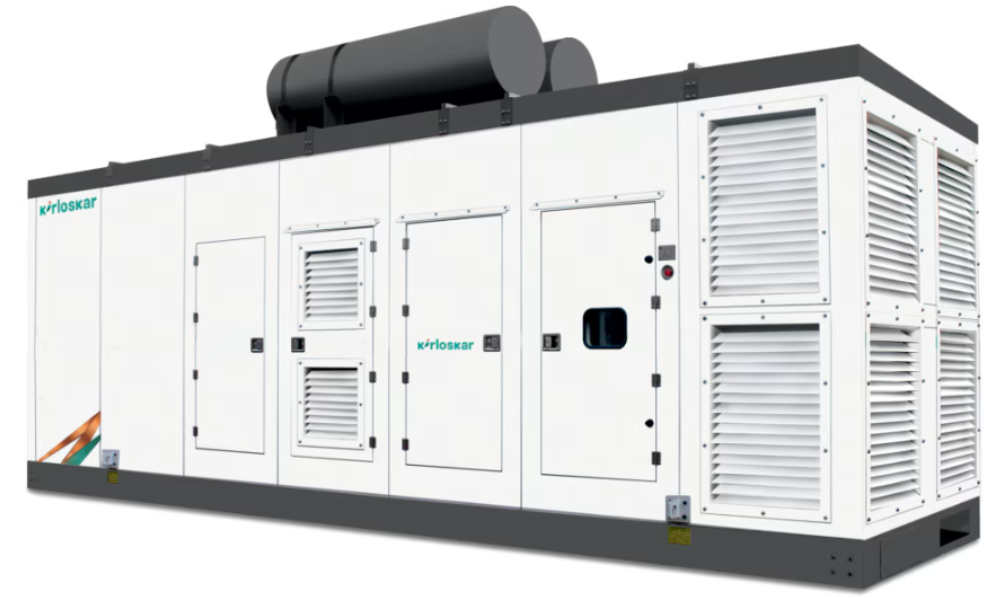
High-capacity generator procurement requires detailed engineering and project coordination. Organisations evaluating a 1010kVA Kirloskar Generator are typically dealing with significant electrical loads, making accurate assessment essential before equipment selection or installation begins.
The first question is not whether the facility has enough connected load to justify a large generator. The important question is how much demand must actually be supported when normal power is unavailable.
A detailed load study should identify critical processes, motor loads, HVAC systems, pumps, compressors, lifts, IT infrastructure, process controls, safety equipment, and other essential systems.
Large motors deserve particular attention because starting demand can influence generator behaviour. Engineers may need to consider the order in which major loads are brought online rather than assuming that every system starts simultaneously.
High-capacity installations also require thorough site planning.
Before procurement, the project team should establish:
- Generator installation location
- Access for delivery and positioning
- Ventilation requirements
- Exhaust arrangement
- Fuel system requirements
- Acoustic considerations
- Electrical cable routes
- Switching and protection requirements
- Maintenance clearance
- Future equipment-removal access
These considerations can be especially important for factories, large commercial complexes, institutional facilities, infrastructure projects, and other major power users in Bangalore.
The generator should also be evaluated as part of the overall electrical system. Existing transformers, switchgear, distribution panels, protection systems, and load-transfer arrangements may affect project design. Coordination among the generator supplier, electrical consultant, contractor, and facility engineering team can therefore be valuable.
Another readiness indicator is having a clearly defined project scope before requesting final commercial comparisons. A quotation for the generator alone cannot be meaningfully compared with a proposal containing additional installation components and services.
Metro Power Corporation supports generator requirements in Bangalore, including businesses assessing larger-capacity backup-power applications.
Procurement teams should request clarity regarding specifications, applicable compliance documentation, commissioning responsibilities, warranty terms, maintenance requirements, and service support. They should also consider lifecycle expenditure, since fuel consumption and scheduled maintenance become increasingly significant when high-capacity equipment accumulates substantial operating hours.
Future expansion needs careful treatment. Capacity planning should account for reasonably foreseeable additions without automatically selecting excessive spare capacity that may not be required.
For major facilities in Bangalore and elsewhere in Karnataka, a 1010kVA generator represents an infrastructure investment rather than a routine equipment purchase.
The strongest buying decision comes after the electrical load, site conditions, operating strategy, installation scope, regulatory requirements, and maintenance responsibilities have all been established. With those elements defined, businesses can evaluate quotations on technical suitability and total project value instead of making a high-capacity generator decision on price alone.
Keywords